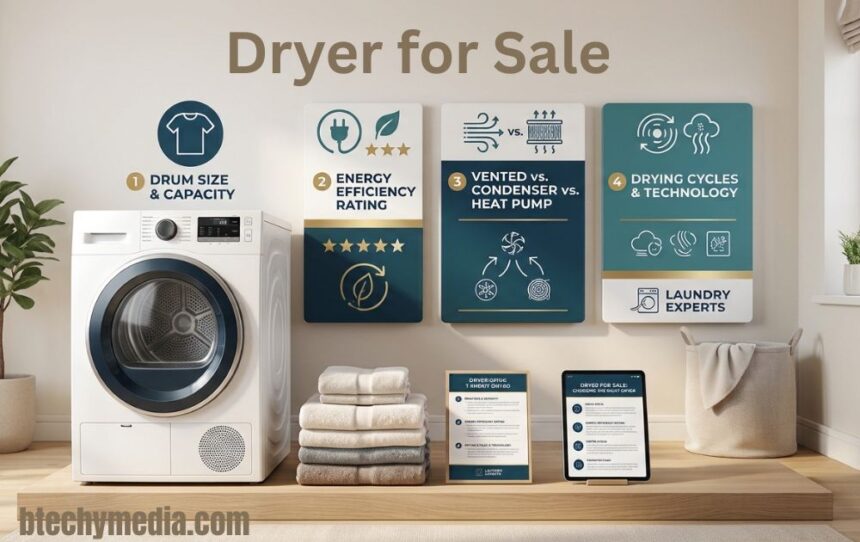
Finding the right dryer for sale can make everyday laundry much easier, especially when outdoor drying is not always practical. Whether you have a large family, live in an apartment, or simply want to save time, a reliable clothes dryer offers convenience and flexibility. Modern dryers come with different technologies, capacities, designs, and drying programs, giving buyers plenty of options to consider. However, choosing the right appliance involves more than comparing prices. You should also think about energy consumption, drying performance, maintenance requirements, and available space. A suitable dryer can protect your clothes, reduce laundry time, and make household routines more manageable. This guide explains the different types of dryers, their important features, and the factors worth considering before purchasing one.
Understanding Different Types of Clothes Dryers
Before exploring a dryer for sale, it helps to understand the technologies available in the market. Each dryer type works differently and offers specific advantages depending on your household requirements. Some models focus on affordability and quick drying, while others prioritize energy efficiency and fabric protection. The three common options include vented dryers, condenser dryers, and heat pump dryers. Your available installation space, electricity costs, laundry habits, and budget should influence your decision. Understanding these differences can prevent unnecessary expenses and help you select an appliance that performs well over time. A dryer that works perfectly in a large laundry room may not be suitable for a small apartment, so matching the appliance to your living environment is important.
Vented Dryers
Vented dryers are among the traditional and straightforward options available to homeowners. They heat air and circulate it through the rotating drum to remove moisture from wet clothing. The humid air then leaves the appliance through an exhaust hose or external ventilation system. These machines are generally less expensive to purchase than many advanced dryer technologies, making them attractive to budget-conscious buyers. They can also provide relatively quick drying cycles, which is useful for households that regularly wash large quantities of clothing. However, proper ventilation is essential because releasing moist air indoors can increase humidity and contribute to condensation problems. Before purchasing a vented dryer, check whether your laundry area has a suitable external outlet and enough room for installation. If you want a simple machine with a lower initial
Condenser Dryers
Condenser dryers offer greater installation flexibility because they do not normally require an external exhaust duct. Instead of releasing moisture outside, these appliances collect water in a removable container or send it through a suitable drainage connection. This arrangement makes them convenient for apartments, enclosed laundry rooms, and homes where installing external ventilation is difficult. Many condenser models also include different temperature settings that help users dry everyday fabrics more carefully. Their purchase prices are often higher than basic vented machines, and their operating costs can vary depending on the model and local electricity rates. Users must also empty the water container regularly when the appliance does not have a direct drainage connection. Cleaning the condenser and filters according to the manufacturer’s instructions helps maintain proper airflow and drying performance. A condenser dryer can be a practical choice when installation flexibility matters more than achieving the lowest possible purchase price.
Heat Pump Dryers
Heat pump dryers are designed to reuse warm air during the drying process rather than continuously releasing it outside. They remove moisture from the air, recover heat, and circulate the warmed air through the drum again. This technology can significantly reduce electricity consumption compared with conventional dryers, making it appealing to households that use their appliances frequently. ENERGY STAR explains that qualifying heat pump dryers can use considerably less energy than standard models, although actual savings depend on the specific appliance and usage patterns. These dryers also operate at relatively low temperatures, which can be gentler on many fabrics. Their main disadvantages include higher upfront prices and potentially longer drying cycles. Buyers should compare energy labels, drum capacity, maintenance requirements, and available warranty coverage before making a decision. If long-term electricity savings and fabric care are important priorities, a heat pump dryer may offer excellent value.
Why Investing in a Quality Clothes Dryer Makes Sense
A quality clothes dryer can improve household convenience in several ways. One of its biggest advantages is the ability to dry laundry regardless of outdoor weather conditions. Rain, humidity, cold temperatures, and limited sunlight can make traditional clothes drying inconvenient, especially for families with busy schedules. A reliable dryer allows you to manage laundry indoors and prepare clothing when needed. It can also reduce the amount of time clothes spend hanging around the home, helping keep living spaces organized. Modern appliances offer different programs for towels, bedding, delicate fabrics, and everyday clothing, providing greater control over the drying process. However, the real value of a dryer depends on selecting a model that matches your household’s needs. A machine with suitable capacity, reliable performance, and reasonable operating costs can become a useful long-term investment rather than an unnecessary expense.
Important Features to Look for in a Dryer for Sale
When comparing a dryer for sale, focus on features that provide practical everyday benefits instead of choosing a model simply because it has the most advanced technology. Start by considering drying capacity, energy efficiency, temperature controls, noise levels, and the available programs. A moisture sensor is particularly useful because it detects when clothing has reached the selected dryness level and can stop the cycle automatically. This helps prevent unnecessary operation and reduces the risk of overdrying. Other helpful features include delayed start, anti-wrinkle settings, child locks, and easy-to-clean lint filters. Some premium models also offer smartphone connectivity and remote monitoring, although these features may not be essential for every household. Compare the appliance specifications carefully and consider whether each feature solves a genuine problem in your laundry routine. The best dryer is not necessarily the most expensive one; it is the model that provides dependable performance and useful convenience within your budget.
Capacity and Drum Size
Dryer capacity is an important consideration because it determines how much laundry the appliance can handle in one cycle. Small households may find a compact model sufficient, while larger families generally benefit from a machine with a bigger drum. A suitable capacity allows clothing to tumble freely, improving airflow and helping distribute heat more evenly. Overloading the drum can restrict movement and leave some garments damp, while purchasing an unnecessarily large appliance may increase the initial cost and take up valuable space. You should also consider the capacity of your washing machine because the dryer needs to accommodate the amount of laundry coming out of each wash cycle. Manufacturers usually measure dryer capacity in kilograms, although available sizes vary between brands and markets. Comparing drum capacity alongside your weekly laundry volume will help you choose a practical model that supports your household without wasting space or resources.
Energy Efficiency and Operating Costs
Energy efficiency deserves attention when evaluating any dryer for sale because electricity consumption affects the total cost of ownership. An inexpensive appliance may appear attractive initially, but higher energy usage can make it more expensive over several years. Check the energy information supplied by the manufacturer and compare models with similar capacities and drying performance. Heat pump technology can offer substantial energy savings, particularly for households that operate their dryers regularly. ENERGY STAR reports that qualifying heat pump dryers can use around 70% less energy than conventional electric dryers under its applicable comparisons. Actual performance depends on the appliance, load size, selected program, and operating conditions. You should also consider local electricity prices when estimating running costs. Choosing an efficient machine, using appropriate load sizes, and cleaning filters regularly can help reduce unnecessary energy consumption while maintaining satisfactory drying results.
Drying Programs and Smart Features
Modern dryers provide several programs that help users handle different laundry requirements. Cotton settings are suitable for many everyday garments, while delicate programs use lower temperatures for fabrics that require extra care. Some appliances also include bedding, sportswear, mixed-load, and quick-dry options. Moisture sensors are particularly valuable because they monitor the drying process and help prevent clothing from remaining in the machine longer than necessary. Anti-wrinkle functions can reduce creasing by continuing gentle drum movement after the main cycle finishes. Premium appliances may also include smartphone applications that allow users to check cycle progress or receive notifications. However, smart connectivity should be treated as an additional convenience rather than a replacement for reliable drying performance. Before paying extra for advanced functions, identify which programs you will actually use. A straightforward dryer with excellent basic settings may be more practical than a complicated appliance filled with features you rarely need.
Electric vs. Gas Clothes Dryers
Electric and gas clothes dryers offer convenient drying performance, but they differ in installation requirements, energy sources, operating costs, and maintenance needs.
| Features | Electric Clothes Dryer | Gas Clothes Dryer |
| Power Source | Uses electricity to generate heat. | Uses natural gas or propane for heating. |
| Installation | Requires a suitable electrical connection. | Requires a gas line and electrical connection. |
| Initial Cost | Often has a lower purchase price. | Can have a higher purchase and installation cost. |
| Operating Cost | Depends on electricity rates and efficiency. | Depends on local gas prices and electricity usage. |
| Drying Speed | Provides effective drying performance. | Often offers faster drying cycles. |
| Maintenance | Requires regular lint filter and vent cleaning. | Requires regular cleaning and professional gas-system checks. |
| Best For | Homes with suitable electrical connections. | Homes with existing gas connections. |
| Main Advantage | Convenient installation and wider availability. | Potentially lower operating costs where gas is affordable. |
Which Is Better?
Choosing between a new and used dryer depends on your budget, expected usage, and willingness to accept possible repair expenses. A new appliance generally offers updated features, manufacturer warranty coverage, and a known usage history. It may also provide better energy efficiency than an older model, depending on the technology involved. Used dryers, on the other hand, can be attractive to buyers who need an affordable appliance or want a temporary solution. However, a lower purchase price does not always mean better value. Older machines may have worn belts, damaged heating elements, noisy motors, or inefficient drying systems. Before purchasing a secondhand dryer, inspect its condition, test different programs, examine the drum, and check whether replacement parts are available. Ask about previous repairs and request any remaining warranty documents. If the used appliance has an uncertain history or needs expensive repairs, investing in a reliable new dryer may be the smarter long-term decision.
How to Find the Best Dryer for Sale
Finding the right dryer requires comparing several options rather than immediately purchasing the first attractive model you see. Begin by setting a realistic budget that includes delivery, installation, and any necessary electrical or ventilation adjustments. Next, compare reputable appliance retailers and authorized sellers to understand the available brands, models, and warranty conditions. Read customer feedback to identify common concerns involving noise, drying performance, maintenance, and reliability. Pay particular attention to reviews from people who have used the appliance for an extended period because they may reveal issues that are not obvious during a showroom demonstration. Compare the manufacturer’s specifications with your actual requirements, especially drum capacity and energy consumption. It is also helpful to ask sellers about return policies, service availability, and replacement parts. A dependable retailer should provide clear product information rather than relying only on promotional claims. Taking time to research different options can help you find a dryer that delivers reliable performance without exceeding your budget.
Common Mistakes to Avoid When Buying a Dryer
Many buyers focus too heavily on the advertised price and overlook factors that affect everyday performance. One common mistake is purchasing a dryer without measuring the available installation space. Even a high-quality appliance becomes inconvenient if it cannot fit through the doorway or operate comfortably in the laundry area. Another mistake is choosing an unsuitable capacity that cannot handle regular household loads. Some buyers also ignore energy consumption, which can increase operating expenses over time. Purchasing a vented machine without checking the ventilation arrangement may create additional installation problems. Similarly, overlooking warranty coverage and after-sales service can make future repairs more complicated. It is also unwise to select an appliance based entirely on brand popularity or promotional discounts. Instead, compare specifications, practical features, maintenance needs, and customer experiences. A careful purchasing decision helps you avoid unnecessary expenses and makes it easier to find a dryer that meets your expectations.
Tips for Maintaining Your Clothes Dryer
Proper maintenance helps protect your appliance, maintain drying performance, and reduce the likelihood of avoidable problems. Even a premium dryer requires regular cleaning and responsible operation to work efficiently. Follow the manufacturer’s maintenance instructions and avoid using the machine in ways that exceed its recommended capacity.
- Clean the lint filter: Remove collected lint after every drying cycle to support airflow and reduce fire risks.
- Avoid overloading: Leave enough space for garments to tumble freely inside the drum.
- Check ventilation: Inspect exhaust hoses and external vents on vented models for blockages or damage.
- Clean internal components: Maintain condenser units, moisture sensors, and other accessible parts according to the manual.
- Use suitable programs: Select the correct temperature and drying cycle for different fabric types.
Regular inspections can help identify unusual sounds, overheating, or reduced drying performance before they develop into more serious problems. If the appliance develops an electrical, gas, or mechanical fault, contact a qualified technician instead of attempting an unsafe repair.
Choosing the Right Dryer for Different Household Needs
Different households have different laundry routines, so a single dryer model cannot satisfy everyone’s requirements equally well. Individuals and couples may prefer compact appliances that handle smaller loads without occupying much floor space. Families with children often benefit from larger drums because they regularly wash towels, school uniforms, bedding, and everyday clothing. People living in apartments may prefer ventless condenser or heat pump dryers because these models provide more installation flexibility. Households with frequent laundry requirements should pay particular attention to durability, energy consumption, and maintenance accessibility. If you regularly wash delicate clothing, look for lower-temperature programs and reliable moisture sensors. Buyers who occasionally use a dryer may find a basic model more economical than purchasing an expensive appliance with advanced features. Think about your weekly laundry volume, available installation area, and preferred operating costs before making your final choice. This approach makes it easier to identify a dryer that fits your lifestyle rather than paying for unnecessary specifications.
Understanding Dryer Prices and Overall Value
The price of a dryer for sale can vary according to its technology, capacity, brand, features, and market availability. Basic vented models generally have lower starting prices, while condenser and heat pump appliances may cost more because of their different drying systems. Larger drums, smart controls, specialized programs, and premium finishes can also increase the purchase price. However, comparing appliances only by their initial cost can create a misleading picture of value. You should consider electricity consumption, expected maintenance, installation requirements, warranty coverage, and the availability of replacement parts. A more efficient appliance may cost more initially but offer lower operating expenses during regular use. On the other hand, an expensive model may not provide meaningful benefits if your household only dries laundry occasionally. Ask retailers for complete pricing information, including delivery and installation charges. Comparing these expenses will help you understand the actual investment required and select an appliance that offers a suitable balance between affordability, performance, and reliability.
Installation and Safety Considerations
Correct installation is essential for safe and dependable dryer operation. Before purchasing a machine, measure the laundry area carefully and check the appliance’s width, height, and depth. Remember to account for doorway measurements, nearby cabinets, electrical outlets, and sufficient space for maintenance. Vented dryers require a suitable exhaust arrangement, while condenser and heat pump models need appropriate access to power and a method of managing collected moisture. Electrical requirements can differ between appliances, so never assume that an existing outlet will support every model. Gas dryers require compatible gas connections and professional installation. Keep the appliance away from excessive moisture and follow the manufacturer’s recommended clearances. Make sure the machine sits on a stable, level surface to reduce vibration and unnecessary noise. Read the safety instructions before using a new appliance and keep flammable materials away from the dryer. If installation involves electrical or gas modifications, hire a qualified professional to complete the work.
Conclusion
Finding the right dryer for sale becomes easier when you understand the different technologies, capacities, features, and operating costs available. Vented dryers can suit buyers looking for a straightforward and affordable appliance, while condenser models offer flexible installation options. Heat pump dryers are particularly attractive for households interested in reducing electricity consumption over time. Before purchasing, compare drum capacity, moisture sensors, drying programs, energy information, warranty coverage, and installation requirements. Consider your household size and laundry habits instead of choosing a machine based only on appearance or promotional pricing. A reliable dryer should make everyday laundry more convenient while providing suitable performance and reasonable long-term costs. By researching your options and purchasing from a trustworthy seller, you can choose an appliance that supports your home and makes laundry routines simpler.
FAQs About Dryer for Sale
1. What Should I Look for When Searching for a Dryer for Sale?
Look for suitable drum capacity, energy efficiency, reliable drying performance, moisture sensors, useful programs, and a clear manufacturer warranty.
2. Which Type of Clothes Dryer Is Most Energy Efficient?
Heat pump dryers are generally among the most energy-efficient options because they recycle warm air during the drying process.
3. Is a Used Clothes Dryer Worth Buying?
A used dryer can offer good value if it is in excellent working condition, has been properly maintained, and does not require expensive repairs.
4. How Often Should I Clean My Dryer?
Clean the lint filter after every cycle and inspect other components regularly according to the manufacturer’s maintenance instructions.
5. What Size Dryer Is Best for a Family?
A medium or large-capacity dryer is often suitable for families, but the ideal size depends on household numbers, washing machine capacity, and weekly laundry volume.