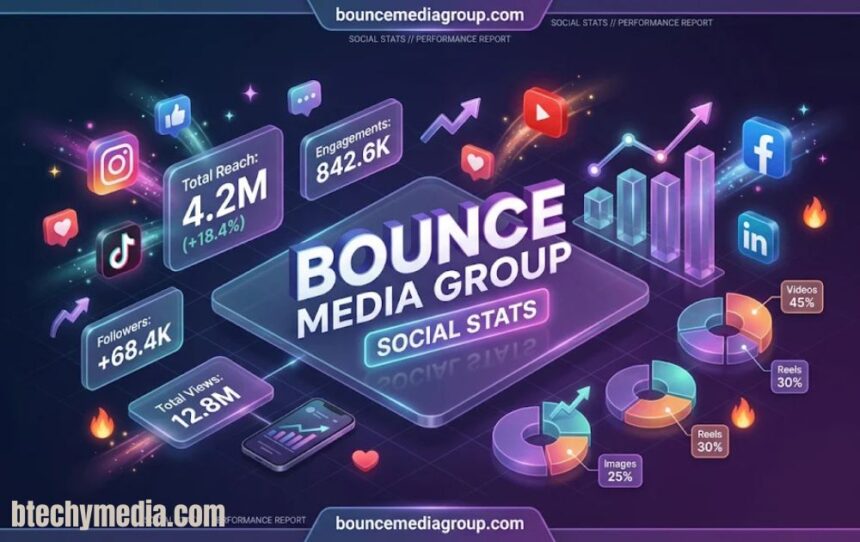
Social media has become an important part of modern communication, marketing, and online business development. Companies, content creators, and digital publishers use social platforms to connect with audiences, share information, and build recognizable brands. However, simply publishing content is not enough to achieve meaningful results. Understanding how people interact with that content is equally important. This is where bouncemediagroupcom social stat becomes an interesting topic for people exploring digital performance and social media analytics. It relates to the broader idea of examining audience activity, engagement, visibility, and growth associated with Bounce Media Group’s online presence. By understanding social statistics, readers can learn how digital performance is measured and why reliable information matters when evaluating an online brand.
What Is Bouncemediagroupcom Social Stat?
Bouncemediagroupcom social stat is a search phrase associated with Bounce Media Group and information about social media statistics. The phrase generally relates to understanding how digital content performs across social networking platforms. These statistics can include audience growth, followers, likes, comments, shares, impressions, and engagement rates. Bounce Media Group’s website includes a Social Stats category alongside topics related to industry news and technology trends. The available information presents the website primarily as a media and informational resource rather than establishing the keyword as the name of a standalone analytics application. Readers interested in the topic should therefore distinguish between published articles, publicly visible statistics, and verified analytics data. This distinction helps prevent misunderstandings when researching digital performance.
Understanding the Meaning Behind the Keyword
The keyword contains three simple elements that explain its purpose. Bounce Media Group identifies the website or brand being researched, while social refers to online networking platforms where people communicate and share content. The word stat is commonly used as a shorter form of statistics, which means measurable information about an activity or performance. Together, these terms describe an interest in social media data connected with Bounce Media Group. People searching for this phrase may want to understand the website’s social presence, explore its published statistics, or learn about digital marketing measurements. It is important to remember that a search keyword does not automatically represent a specific software product or verified reporting service. Checking the original website and the sources behind published figures provides a more dependable understanding.
Why Social Media Statistics Matter
Social media statistics help individuals and businesses understand whether their online activities are producing useful results. Without measurable information, it becomes difficult to identify successful content, understand audience preferences, or improve a marketing campaign. For example, a business may publish several promotional posts but receive very different responses from its followers. By comparing engagement, reach, and clicks, marketers can identify which topics attract attention and which formats need improvement. Statistics also help organizations evaluate their progress over time instead of relying on personal opinions. A growing audience can indicate increasing visibility, while meaningful comments and shares may suggest that people find the content valuable. These insights make social analytics an important part of planning a consistent and effective digital marketing strategy.
Important Social Media Metrics to Understand
Social media platforms provide different measurements that explain how users interact with online content. Understanding these metrics makes it easier to evaluate performance and recognize areas that need attention. Some measurements focus on audience size, while others explain content visibility, interaction, and website traffic. Looking at several metrics together provides a more balanced picture than relying on a single number. For example, a post might receive thousands of impressions but very few comments or clicks. Another post might reach fewer people but generate meaningful conversations and customer inquiries. Both results provide useful information, but they represent different types of performance. Anyone researching bouncemediagroupcom social stat should understand these basic measurements before drawing conclusions about an account or digital brand.
Followers and Audience Growth
Followers represent the people who subscribe to a social media account to receive its updates and content. This measurement provides a basic indication of audience size and can help businesses monitor their online growth. However, having a large number of followers does not automatically mean that an account has strong influence or successful marketing results. Some followers may rarely interact with published content, while smaller accounts can develop highly active communities. Audience growth is therefore more useful when examined alongside engagement and reach. Businesses should also monitor how quickly their follower numbers change over specific periods. A steady increase may indicate that content is attracting new audiences, while sudden changes may require further investigation. Quality audience growth is generally more valuable than collecting followers without building meaningful relationships.
Engagement Rate and Interactions
Engagement measures how audiences interact with social media content through likes, comments, shares, saves, and other platform-specific actions. It helps marketers understand whether their posts encourage people to participate rather than simply view the content. Engagement rate provides a percentage-based way to evaluate these interactions against a selected measurement, such as followers or reach. For example, dividing total interactions by reach and multiplying by 100 produces an engagement rate based on reach. Businesses should always identify the formula they use because different reporting methods can produce different results. A strong engagement rate may suggest that content connects with its intended audience, although the quality of interactions also matters. Meaningful questions, relevant discussions, and genuine customer responses can provide more insight than likes alone.
Reach and Impressions
Reach and impressions are two important measurements used to understand content visibility. Reach represents the number of unique accounts that have seen a particular post, while impressions measure how many times the content has appeared on users’ screens. One person can generate several impressions by viewing the same post multiple times, but that person generally counts as one reached account. These measurements help businesses evaluate how widely their content is being distributed. For example, a promotional campaign with high reach may introduce a brand to many new people. High impressions can indicate repeated exposure, which may support brand recognition over time. However, neither measurement independently proves that viewers are interested in the message or likely to become customers. Comparing visibility with engagement and conversions provides a more useful evaluation.
Shares, Comments, and Video Views
Shares, comments, and video views offer additional information about audience behavior. When people share a post, they help distribute its message beyond the account’s existing followers. Comments can reveal opinions, questions, and concerns that may help businesses understand their communities more clearly. Video views show how frequently video content has been watched according to the platform’s measurement rules. However, view definitions can differ between social networks, so marketers should avoid treating every platform’s video statistics as directly comparable. A video with many views may still have limited audience retention if people leave after a few seconds. Monitoring watch time, completion rates, comments, and shares helps explain whether video content is genuinely useful or entertaining. These indicators are particularly valuable when evaluating campaigns that depend on audience participation.
Major Social Media Platforms to Monitor
Different social media platforms attract different audiences and support different types of content. Facebook is commonly used for community discussions and business updates, Instagram focuses heavily on visual content, and TikTok provides opportunities for short-form video discovery. YouTube supports longer videos, tutorials, and entertainment, while LinkedIn is particularly useful for professional communication and business networking. Each platform provides its own analytics features, which allow account owners to monitor audience activity and content performance. When researching social statistics, it is important to understand these differences because a successful strategy on one network may not produce identical results on another. Businesses should select platforms according to their audiences, objectives, and available resources instead of trying to maintain an equally active presence everywhere.
Facebook and Instagram
Facebook and Instagram remain useful platforms for businesses that want to develop brand awareness and maintain direct communication with customers. Facebook offers opportunities to share business announcements, community updates, videos, and informative posts. Instagram provides visual storytelling through photographs, Reels, Stories, and other creative formats. Both platforms offer analytics features that help eligible account owners understand their audience activity and content performance. Businesses can monitor follower changes, reach, impressions, interactions, and other available measurements. These insights can help identify which posts receive attention and what type of content encourages users to respond. For example, a clothing business might discover that product videos generate more interactions than ordinary promotional images. Using these findings can help marketers create more relevant content and improve their communication strategies.
TikTok, YouTube, and LinkedIn
TikTok, YouTube, and LinkedIn provide different opportunities for reaching audiences and measuring digital performance. TikTok focuses on short-form videos and content discovery, making it useful for brands that want to communicate through creative and entertaining material. YouTube supports tutorials, product demonstrations, educational videos, and longer entertainment content. Its analytics can provide information about watch time, audience retention, views, and traffic sources. LinkedIn, meanwhile, focuses on professional networking, industry discussions, recruitment, and business development. Its available statistics help organizations understand how their professional content performs. Businesses should not compare all these platforms using identical expectations because their audiences and content formats differ. Instead, they should establish separate performance goals and evaluate each platform according to its purpose.
How to Analyze Social Media Performance
Analyzing social media performance requires more than checking follower counts or looking at the number of likes on individual posts. A useful analysis begins with a clear objective, such as increasing brand awareness, attracting website visitors, generating leads, or improving customer communication. Once the objective is established, marketers can select measurements that directly relate to the desired outcome. They should collect information from reliable platform analytics, record the reporting period, and compare results with previous performance. For example, if a business wants more website visitors, link clicks and referral traffic may be more useful than impressions alone. Regular comparisons can reveal patterns and help identify changes in audience behavior. This structured approach makes social statistics easier to understand and turns raw numbers into practical marketing decisions.
Benefits of Tracking Social Statistics
Tracking social statistics helps businesses understand their online performance and make more informed marketing decisions. Instead of publishing content without a clear direction, organizations can use measurable information to improve their strategies.
- Better audience understanding: Learn about audience interests, preferences, and interactions.
- Improved content planning: Identify which topics and formats attract attention.
- Stronger brand awareness: Monitor visibility and audience growth over time.
- Campaign evaluation: Understand whether promotional activities meet their objectives.
- Smarter marketing decisions: Use measurable results to improve future campaigns.
Common Challenges in Social Media Analytics
Although social statistics provide useful information, interpreting them correctly can sometimes be difficult. One common challenge is that different platforms use different definitions for measurements such as views, engagement, and reach. This makes direct comparisons less reliable when marketers do not understand the reporting methods. Another issue involves incomplete or estimated third-party information. Some analytics websites display approximate figures without clearly explaining how they collected the data. Businesses may also focus too heavily on impressive numbers while overlooking meaningful outcomes such as qualified leads and customer conversions. Privacy restrictions, changing platform features, and reporting delays can create additional limitations. To avoid these problems, marketers should prioritize first-party analytics, document their measurement methods, and clearly identify whether a figure is verified, estimated, or publicly reported.
How Businesses Can Improve Their Social Media Strategy
A successful social media strategy begins with understanding the audience and providing content that addresses its interests. Businesses should establish realistic objectives before choosing platforms, publishing schedules, and campaign formats. Consistency is important, but publishing frequently should never come at the expense of content quality. Organizations can experiment with educational posts, short videos, customer stories, product demonstrations, and industry updates to discover what works best. Reviewing performance regularly helps identify successful approaches and areas that require improvement. Businesses should also respond to relevant comments, answer questions, and participate in conversations to build stronger relationships. Rather than copying competitors, they should develop a recognizable communication style that reflects their brand identity. Combining creative ideas with reliable analytics creates a more sustainable approach to social media growth.
The Role of Technology in Social Media Analytics
Technology has made social media performance measurement more accessible and efficient. Modern analytics systems can organize large amounts of information into understandable reports, allowing marketers to monitor multiple performance indicators without reviewing every post individually. Artificial intelligence can also help identify patterns, summarize audience feedback, and support content planning. Scheduling platforms allow businesses to organize publishing activities, while reporting tools can help teams compare campaign results across different periods. However, technology should support human decision-making rather than replace it completely. Automated systems may produce estimates or miss important context when interpreting audience behavior. Businesses should understand the capabilities and limitations of every tool they use. When technology is combined with careful analysis and practical marketing knowledge, organizations can develop a clearer understanding of their digital performance.
Future Trends in Social Media Statistics
Social media analytics will continue developing as platforms introduce new content formats, measurement features, and artificial intelligence capabilities. Short-form videos, personalized recommendations, social search, and creator partnerships are likely to remain important areas of digital marketing. Businesses may increasingly focus on deeper measurements such as audience retention, meaningful interactions, customer journeys, and conversions rather than relying mainly on follower counts. Privacy expectations will also influence how platforms collect and present audience information. As reporting systems evolve, marketers will need to adapt their measurement methods and pay closer attention to data quality. Another important development is the growing interest in understanding how audiences move between social platforms and websites before making decisions. These changes make reliable analytics knowledge increasingly valuable for companies, publishers, and independent creators.
Conclusion
Bouncemediagroupcom social stat provides an interesting starting point for understanding social media performance, audience engagement, and digital marketing measurements. Exploring this topic helps readers recognize the importance of statistics such as followers, reach, impressions, interactions, and audience growth. These measurements can reveal how people respond to online content and help businesses identify opportunities to improve their strategies. However, accurate analysis depends on using reliable sources and understanding how individual metrics are calculated. Readers should also distinguish between publicly available information, third-party estimates, and verified account analytics. Social media success is not simply about achieving impressive numbers; it is about building meaningful relationships and reaching measurable objectives. By combining useful content, consistent communication, and responsible data analysis, businesses can develop a stronger and more effective digital presence.
FAQs About bouncemediagroupcom social stat
1. What does Bouncemediagroupcom Social Stat mean?
It refers to social media statistics and digital performance information associated with Bounce Media Group and its online presence.
2. What are the most important social media statistics?
Followers, engagement rate, reach, impressions, shares, comments, video views, and conversions are important performance measurements.
3. Why should businesses monitor social media statistics?
Businesses can understand audience behavior, evaluate marketing campaigns, improve content quality, and measure their online growth.
4. Can social media statistics improve marketing performance?
Yes, reliable analytics help marketers identify successful content strategies and make better-informed marketing decisions.
5. Are social media statistics always accurate?
No, accuracy depends on the data source, reporting method, collection period, and whether the information is verified or estimated.